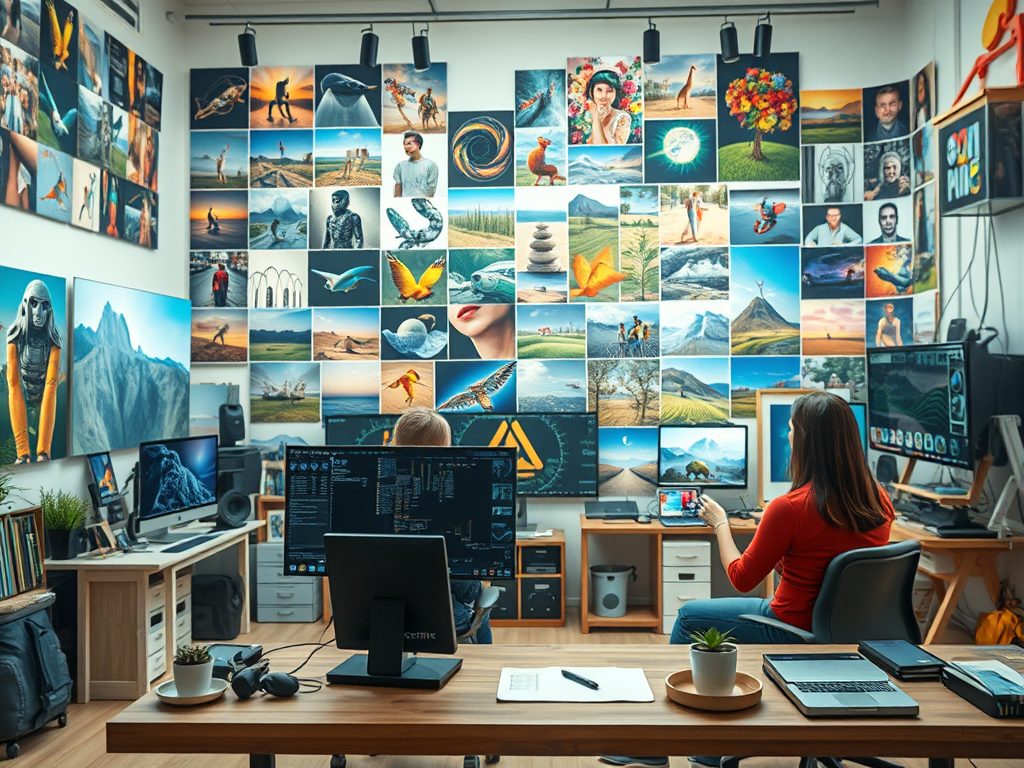
Artificial Intelligence (AI) is no longer a concept of the future—it’s a reality today, seamlessly integrating into various facets of our daily lives. From enhancing productivity to creating art, AI is reshaping the way we interact with technology. One of the most exciting applications of AI is its ability to generate realistic images. This article explores the most popular AI platforms for creating photorealistic images, their uses, and how they are impacting our world.
What AI Image Generator is Everyone Using?
AI image generators have become a hot topic, with many users curious about which ones stand out. These platforms have revolutionized how we approach image generation, making it accessible to anyone with an idea and a computer.
DALL-E 2: Pioneering Imaginative Realism
Developed by OpenAI, DALL-E 2 is renowned for its ability to create highly detailed images from textual descriptions. This tool is perfect for users looking to create imaginative and photorealistic images, allowing them to transform abstract ideas into vivid realities. The versatility of DALL-E 2 lies in its capacity to generate images that range from the mundane to the fantastical, catering to a diverse user base.
Midjourney: The Artist’s Ally
Known for its artistic flair, Midjourney is praised for generating hyper-realistic images. Many artists and creators use it to bring their visions to life, exploring new dimensions of creativity. Midjourney provides a canvas where traditional artistic techniques merge with digital innovation, offering a fresh approach to visual art.
Stable Diffusion: The Open-Source Marvel
This open-source model has gained popularity for its versatility and accessibility. Stable Diffusion allows users to craft ultra-realistic images with ease, attracting a community of developers and artists who continuously work to enhance its capabilities. The platform’s open-source nature encourages collaboration and innovation, ensuring a dynamic evolution of its features and functionalities.
Craiyon (Formerly DALL-E Mini): Accessibility Meets Creativity
Craiyon offers a more accessible entry point for users interested in AI-generated images. While it may not match the photorealistic quality of its counterparts, it provides a fun and easy way to experiment with AI art generation. This platform democratizes AI art by lowering the barriers to entry, making creative exploration possible for a broader audience.
Best AI Image Generators for Photorealism
When it comes to creating images that closely resemble photographs, certain AI platforms excel, offering unique strengths to cater to different creative goals.
DALL-E 2: Bridging Creativity and Reality
DALL-E 2 utilizes advanced machine learning algorithms to generate images that are not only realistic but also creatively imaginative. This AI model interprets textual prompts to create images that can range from realistic to surreal, depending on the user’s input. Users appreciate DALL-E 2 for its ability to maintain a balance between artistic expression and realism, enabling them to convey complex ideas visually.
Midjourney: Pushing the Boundaries of Digital Art
Midjourney’s strength lies in its ability to produce hyper-realistic artwork. It’s particularly popular among digital artists who want to explore new realms of creativity without the constraints of traditional media. Its user-friendly interface makes it accessible for both beginners and seasoned artists, providing a platform where creativity knows no bounds.
Stable Diffusion: Community-Driven Innovation
Stable Diffusion is favored for its open-source nature, allowing developers to tweak and improve the model to suit their needs. This flexibility has led to a community-driven effort to enhance its capabilities, resulting in highly realistic image outputs. The collaborative spirit of its user base continually pushes the boundaries of what Stable Diffusion can achieve, making it a dynamic tool for innovation.
Republiclabs.ai: A Gateway to AI Art
Republiclabs.ai offers a more accessible entry point for users interested in AI-generated images. It provides a fun and easy way to experiment with AI art generation. This platform serves as a stepping stone for newcomers to the world of AI art, fostering creativity and curiosity in a user-friendly environment. The platform stands out with its multi-model generation capability, able to generate content with multiple models in parallel with a single prompt.
How AI Image Generators Work
AI image generators utilize deep learning models known as Generative Adversarial Networks (GANs). These networks consist of two parts: a generator and a discriminator. The generator creates images, while the discriminator evaluates them for realism, refining the output with each iteration.
Generative Adversarial Networks: The Core of AI Creativity
Generative Adversarial Networks (GANs) are at the heart of AI image generation. The intricate dance between the generator and the discriminator enables the creation of images that become increasingly convincing over time. This adversarial process is a hallmark of AI’s ability to mimic human-like creativity, producing outputs that challenge our perceptions of digital art.
Text to Image: Transforming Words into Visuals
Most AI image generators operate on a text-to-image basis, where users provide a textual description, and the AI creates an image based on that input. This process involves natural language processing to interpret the description and generate corresponding visuals. The seamless translation of text into image opens new avenues for storytelling and visual communication, allowing users to visualize their narratives with precision.
Image to Real Life AI: Enhancing and Transforming
Some platforms also offer image-to-image translation, where an existing image is transformed or enhanced using AI. This technique is useful for improving image quality or altering specific aspects to achieve a desired look. The capability to modify and refine existing images highlights AI’s potential in digital restoration and creative transformation.
Applications of Realistic AI Image Generators
AI-generated images have a multitude of applications across various fields, each benefiting from the unique capabilities AI offers.
Art and Design: Exploring New Frontiers
Artists and designers leverage AI to explore new creative possibilities, generate ideas, and create artwork that blurs the line between digital and physical art forms. AI tools empower artists to push the boundaries of their creativity, offering novel ways to express their artistic vision and engage with their audience.
Marketing and Advertising: Crafting Compelling Visuals
Brands use AI-generated images to create compelling and visually appealing content for advertising campaigns. The ability to quickly generate images tailored to specific themes or audiences is a significant advantage. AI enables marketers to craft personalized visual narratives, enhancing brand storytelling and consumer engagement.
Entertainment and Media: Redefining Visual Storytelling
In the entertainment industry, AI is used to create realistic special effects, virtual environments, and characters. It allows creators to experiment with visual storytelling in ways that were previously impossible or cost-prohibitive. AI’s role in media production is expanding, offering new tools for filmmakers and game designers to bring their creative visions to life.
Education and Research: Visualizing Complex Concepts
AI-generated images aid in educational and research settings by providing visual representations of complex concepts, enhancing learning experiences, and visualizing scientific data. The ability to generate accurate and informative visuals supports educators and researchers in conveying intricate ideas with clarity and precision.
Is Midjourney the Best AI Art Generator?
The question of which AI platform is the best is subjective and depends on the user’s needs. Midjourney has garnered a reputation for its artistic quality and ease of use, making it a favorite among digital artists. However, platforms like DALL-E 2 and Stable Diffusion offer unique strengths that cater to different creative goals.
Comparing Artistic Capabilities
Each AI platform has distinct attributes that appeal to different users. Midjourney’s artistic capabilities attract those seeking high-quality artistic outputs, while DALL-E 2’s imaginative range appeals to users looking for creativity beyond realism. Meanwhile, Stable Diffusion’s open-source model caters to a community-driven approach, fostering innovation and customization.
User Experience and Accessibility
Ease of use and accessibility are crucial factors when selecting an AI art generator. Midjourney’s intuitive interface ensures that artists, regardless of experience level, can navigate the platform effectively. Similarly, Craiyon offers a simple entry point for beginners, making AI art accessible to a wider audience.
Tailoring AI to Creative Goals
Ultimately, the best AI art generator is the one that aligns with the user’s creative objectives. Whether it’s producing photorealistic images, experimenting with abstract art, or developing new creative techniques, each platform provides tools that cater to specific artistic pursuits.
The Future of AI in Realistic Image Generation
As AI technology continues to evolve, the potential for creating even more lifelike images grows. The development of more sophisticated algorithms and increased computational power will enable AI to generate images that are indistinguishable from reality.
Advancements in AI Algorithms
The evolution of AI algorithms promises to enhance the realism and complexity of generated images. As researchers and developers continue to refine these technologies, we can expect AI to produce outputs that challenge our perceptions of digital art, pushing the boundaries of what is visually possible.
Expanding Creative Possibilities
AI’s role in creative industries is poised to expand, offering new tools and techniques for artists and designers. The integration of AI in creative processes will facilitate innovative approaches to art and design, enabling creators to explore uncharted territories and redefine artistic expression.
Bridging Reality and Imagination
In the coming years, we can expect AI to play an even more significant role in creative industries, pushing the boundaries of what is possible in digital art and beyond. The future of AI-generated images will be characterized by a seamless blend of reality and imagination, offering endless possibilities for artistic exploration.
Conclusion
AI image generators have transformed the landscape of digital creativity, offering tools that empower users to create stunning, realistic images with ease. Whether you’re an artist, marketer, or simply curious about the possibilities, AI offers a world of potential waiting to be explored. As technology advances, the capabilities of AI will only continue to expand, bringing us closer to a future where the line between reality and imagination is beautifully blurred.
Embracing AI’s Creative Potential
AI’s creative potential is vast and continually growing. By embracing these technologies, users can unlock new ways to express their creativity and engage with the world around them. The journey into AI art is just beginning, and its impact on the creative landscape promises to be profound and enduring.
A World of Endless Possibilities
As we look to the future, the possibilities for AI-generated art are endless. The marriage of technology and creativity will continue to evolve, offering new opportunities for innovation and artistic expression. AI’s role in shaping the future of art and design is just beginning, and its potential is limited only by our imagination.
Leave a Reply