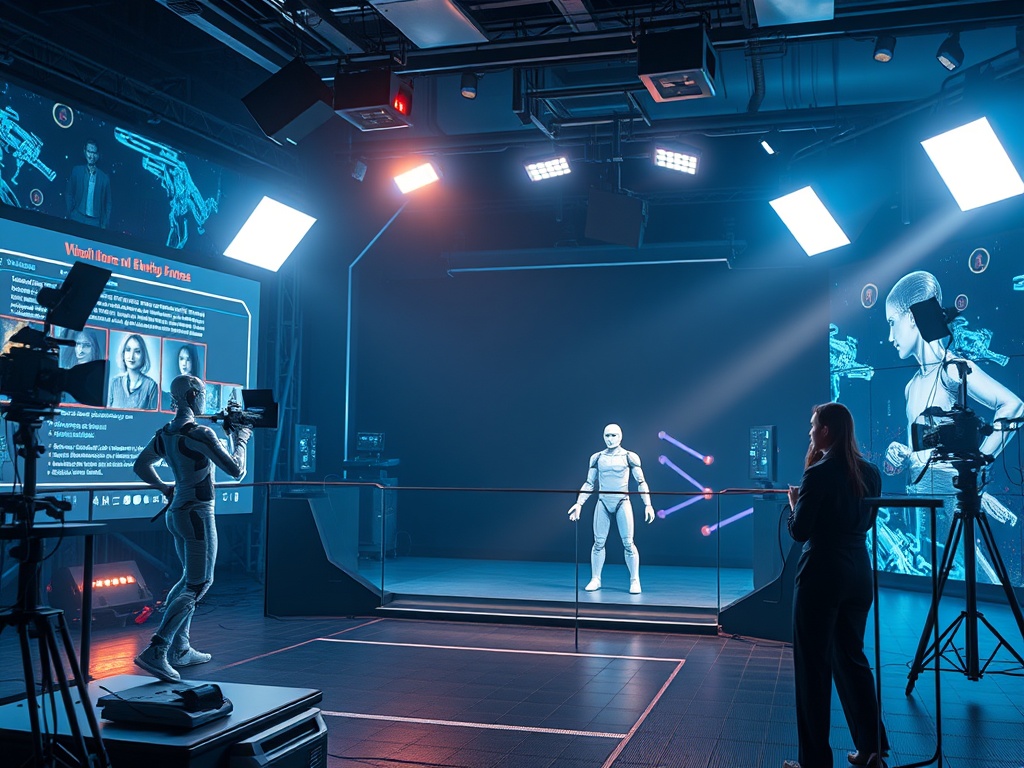
In the glittering world of Hollywood, artificial intelligence is no longer a futuristic plot device—it’s reshaping the industry from script to screen. As of August 2025, AI technologies are generating scripts, crafting hyper-realistic scenes, and even creating virtual stars that rival human performers. With tools like generative AI models from OpenAI and Adobe, filmmakers are pushing boundaries, but questions loom: Will AI disrupt jobs and creativity, or enhance storytelling and efficiency? This deep dive explores emerging AI tech in Hollywood, real-world examples from recent films, and expert opinions on its transformative impact. Whether you’re a film buff, aspiring creator, or industry insider, understanding AI’s role in movies is essential for navigating the future of entertainment. Keywords like “AI in Hollywood 2025,” “AI-generated scripts,” and “virtual actors in film” are dominating searches—let’s unpack why.
Emerging Tech: AI-Scriptwriters Revolutionizing Storytelling
AI-scriptwriters are at the forefront of Hollywood’s AI evolution, automating what was once a deeply human craft. Tools like ChatGPT and specialized platforms such as ScriptBook use natural language processing to generate plot outlines, dialogue, and full scripts based on prompts. In 2025, Adobe’s updates to Premiere Pro integrate AI for script analysis and rewriting, allowing editors to refine narratives in real-time. These systems analyze vast datasets of successful films to predict audience appeal, optimizing elements like pacing and character arcs.For instance, AI can churn out a thriller script in minutes, incorporating trends from box-office hits. Billy Ray, a veteran screenwriter, notes that while AI handles rote tasks like initial drafts, it lacks the emotional depth humans provide. Yet, enhancements like predictive analytics from platforms like Prescene.ai are streamlining development pipelines, reducing pre-production time by up to 50%. This tech isn’t just for blockbusters; independent filmmakers use free tools like Grok or Claude to brainstorm ideas, democratizing access to high-quality writing. As AI evolves, expect hybrid models where humans collaborate with machines, blending data-driven insights with creative intuition.
AI-Generated Scenes: From VFX to Full Sequences
Beyond scripts, AI is transforming scene creation through advanced generative models. Tools like Republiclabs.ai and Luma AI enable filmmakers to produce complex visuals from text descriptions, generating everything from explosive action sequences to serene landscapes. In 2025, Disney and Netflix are quietly adopting these for content creation, with Luma opening a dedicated lab in LA to push video generation boundaries. Emerging tech like Higgsfield Speak allows for camera control, emotion manipulation, and SFX integration, potentially eliminating the need for large crews. AI algorithms speed up post-production tasks such as editing, color correction, and sound design, with platforms like Respeecher cloning voices for lifelike audio. This not only cuts costs but enhances creativity—filmmakers can prototype scenes rapidly, iterating on ideas that would once take weeks. However, concerns arise over job displacement for traditional VFX artists, as AI handles intricate effects like de-aging actors in real-time. The result? More dynamic, personalized content, but at the risk of homogenizing Hollywood’s visual style.
Virtual Actors and Stars: Machines Taking the Spotlight
Perhaps the most controversial AI advancement is virtual actors—digital performers created or resurrected via deep learning. Technologies like deepfakes and AI synthesis from companies such as Respeecher allow for cloning voices and appearances, bringing back legends like James Dean or creating entirely new stars. In 2025, tools like Vidu enable users to insert themselves or AI-generated characters into scenes without actors or sets. Hollywood is experimenting with these for flexibility and cost savings. For example, AI can generate hyper-realistic digital twins for stunts or background roles, as seen in emerging productions. Mark Hamill has voiced concerns about de-aging tech repurposing his likeness, highlighting ethical issues like consent and royalties. Yet, proponents argue virtual actors enhance inclusivity, allowing diverse representations without physical limitations. As AI improves natural language processing for dialogue delivery, we’re nearing a era where entire casts could be machine-generated, blurring lines between reality and simulation.
Examples from Recent Films: AI in Action
Recent films showcase AI’s practical impact. In 2024’s “Heretic” by A24, a disclaimer emphasized no generative AI was used, underscoring industry wariness. Contrastingly, “Next Stop Paris,” TCLtv+’s first fully AI-produced film, used generative tools for scripting and animation, creating a romantic comedy in hours. Other examples include de-aging in films like the upcoming Tom Hanks project, where AI real-time effects rejuvenated actors. AI-driven VFX shone in 2025 blockbusters, with tools like Runway ML automating effects in indie hits. Short films generated by AI creators using Gen-3, Luma, and Kling have gone viral, producing cinema-quality trailers in minutes. SAG-AFTRA’s “Future Shock” documentary highlights how AI revolutionized productions like “The Mandalorian” sequels, using LED walls and AI backgrounds. These cases illustrate AI’s shift from auxiliary tool to core element, enabling faster, cheaper filmmaking while sparking debates on authenticity.
Expert Opinions: Disruption or Enhancement?
Experts are divided on AI’s role in Hollywood. On the disruption side, screenwriters like Paul Schrader fear AI undermines craft, potentially replacing human jobs in scripting and production. A University of Washington Q&A notes valid concerns from filmmakers about studios exploiting AI to cut labor costs. Hollywood Reporter’s “AI Civil War” article details ethical dilemmas, with artists worried about creativity being commodified. Conversely, enhancement advocates like those at Deloitte predict AI will boost operations, from predictive analytics to personalized content. Neil Chase, in his 2025 analysis, argues AI democratizes tools, allowing independents Hollywood-level access. At AI on the Lot 2025, experts emphasized integration into traditional filmmaking, creating new roles like AI practitioners on set. Bong Joon Ho sees AI as a collaborator, enhancing rather than replacing human ingenuity. Overall, consensus leans toward hybrid models: AI handles efficiency, humans drive emotion. As one X user put it, “roles change, but productions get more elaborate.”
Conclusion: Embracing AI’s Cinematic Revolution
The future of AI in Hollywood is a double-edged sword—promising innovation while posing challenges. From AI-scriptwriters streamlining ideas to virtual actors resurrecting icons, and scenes generated in seconds, the industry is evolving rapidly in 2025. Recent films like “Next Stop Paris” prove AI’s viability, but expert opinions underscore the need for ethical guidelines to balance disruption and enhancement. As AI tools become ubiquitous, filmmakers must adapt, using them to amplify creativity rather than supplant it. Whether it leads to a golden age of personalized movies or a battle for artistic souls, one thing’s clear: Hollywood’s next blockbuster might be written, directed, and starred by machines. Stay tuned—what’s your take on AI in film? Share below and explore more on “AI disrupting Hollywood” trends.
Leave a Reply