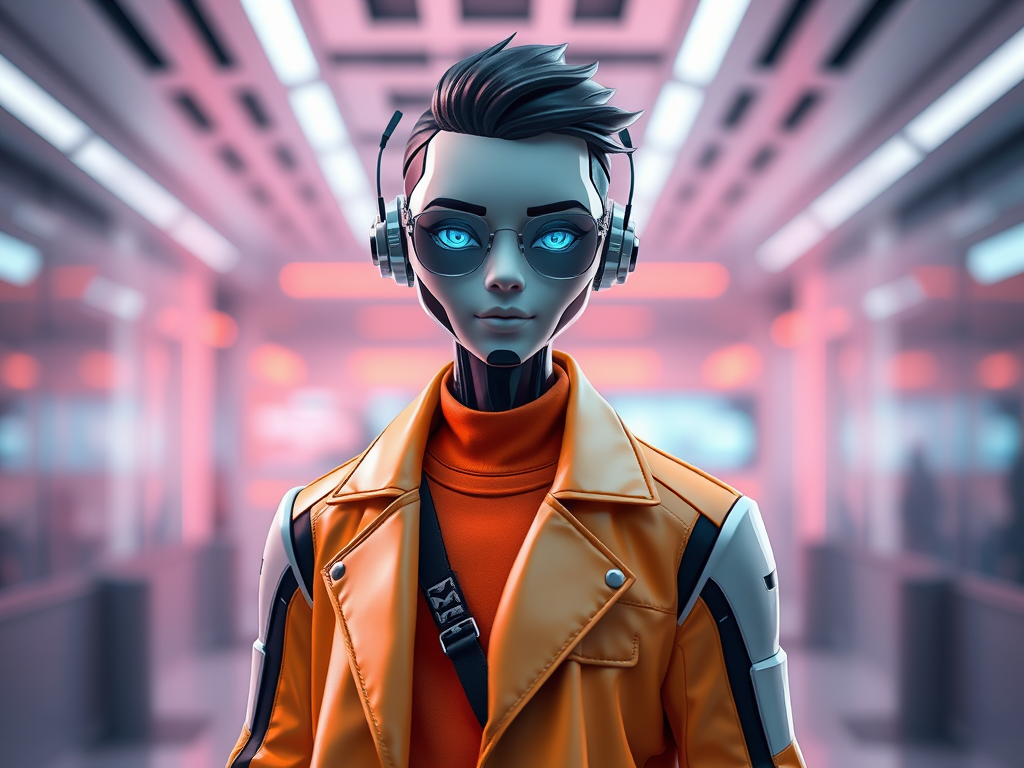
In recent years, virtual or AI influencers — digital avatars designed, animated, and “cast” across social media — have moved from novelty to mainstream. These synthetic creators walk the line between fiction and marketing, enabling brands to scale content creation, maintain consistency, and bypass many logistical hurdles of real-world production. But how are they made? The secret lies in AI video and image generation tools.
This post will dive into:
- What an AI influencer is (and why brands care),
- The tech stack behind AI images and videos,
- A hands-on walk-through using RepublicLabs.ai,
- Best practices, challenges, and ethical considerations, and
- Predictions for the future of AI influencers.
Let’s get into it.
What Is an AI Influencer — And Why Should Brands Pay Attention?
An AI influencer (aka virtual influencer or synthetic influencer) is a digital persona created with generative AI, typically appearing in images or videos, posting on social media like any real influencer would. Some well-known examples: Aitana López from Spain, a virtual model earning income via social media presence. (Wikipedia)
Brands are intrigued by AI influencers because:
- Scalability & consistency — once trained, an AI influencer can “act” in many scenes, outfits, and formats without repeated photoshoots.
- Control over identity & alignment — you decide every attribute: appearance, voice, style, values.
- Lower production cost — no need to hire real models, stylists, or rentals for every shoot.
- Rapid iteration & A/B testing — you can quickly generate multiple variants for creative testing.
- Always-on presence — virtual influencers never age, sleep, or take vacations.
That said, executing this well depends on strong generative AI pipelines, especially for images and video.
Anatomy of AI Influencer Generation: Image + Video + Training
To produce believable, consistent content from an AI influencer, one typically combines:
1. Image Generation (Still Portraits, Scenes, Mockups)
Generative image models like Stable Diffusion, Midjourney, or proprietary offerings form the base. These systems convert text prompts (e.g. “a stylish young woman in athletic wear, sunset cityscape background”) into high-fidelity images. The trick is designing prompts that preserve identity consistency across contexts (pose, angle, lighting).
Earlier works like Make-A-Video and Text2Video-Zero also show how image generation frameworks can bootstrap video generation by learning motion dynamics over time. (arXiv)
2. Video Generation (Animating the Avatar)
Video elevates AI influencer content to reels, stories, short ads, etc. Text-to-video diffusion and generative models now allow short clips from prompts or turning generated stills into animated versions. RepublicLabs supports text-to-video generation as part of its offering. (Mrai Tools)
Some models also decompose content into several temporal steps, using large language models for scripting, then rendering motion with “videographer” modules (e.g. the Vlogger framework). (arXiv)
3. Identity Training / Consistency Models
To maintain a coherent brand identity (e.g. facial features, outfit style, attitude), you often “train” a model on reference images or fine-tune or wrap a LoRA (low-rank adaptation) layer tailored to your influencer. This ensures when you generate new images or pose transitions, the face and style remain recognizable. (pykaso.ai)
Many AI influencer platforms offer built-in “trainer” modules so that your avatar’s identity stays consistent across content.
Step-by-Step: Try Out Your Own AI Influencer with RepublicLabs.ai
To bring this home, let’s walk through a sample workflow using RepublicLabs.ai, a generative AI platform that supports both image and video generation. (RepublicLabs.ai)
Step 1: Signup & initial prompt
- Start by visiting RepublicLabs.ai and creating an account. (RepublicLabs.ai)
- In their “Generate” section, you can enter your prompt — for example:
“A trendy young female tech influencer, urban café background, soft morning light, friendly smile”
- RepublicLabs can run multiple models at the same time (for image and video) to produce your visuals. (SourceForge)
Step 2: Generate images
- The platform returns multiple image candidates. Choose the ones you like.
- Save your favorites — these become reference imagery for consistency.
Step 3: (Optional) Train for consistency
- Some platforms allow you to fine-tune or “train” on your chosen images, helping the system remember your avatar’s features. (Check whether RepublicLabs supports this or pair it with downstream tools.)
- If not, you can keep your reference images and always feed them as “style seed” prompts to maintain consistency.
Step 4: Generate video content
- Use the text-to-video tool to make short clips. Example prompt:
“Same influencer walking through a bookstore, turning and waving to camera, 5-second loop”
- The tool generates a short video clip.
- You can also convert a selected image into an animated version, giving slight motion, lip movements, or camera pans.
Step 5: Review, iterate, polish
- Videos can sometimes have artifacts or odd distortions (hands glitching, morphing faces). That’s expected at this stage.
- If needed, go back, refine your prompt, adjust lighting, or try a different model.
- Once satisfied, download the best version and prepare to publish.
This workflow lets you produce both still and moving content for your AI influencer — from scratch, without extensive technical know-how.
Best Practices & Tips for Better Results
To get better quality, more consistent outcomes, bear these in mind:
1. Use anchor or reference prompts
Always include anchor features (e.g. hair color, face shape, outfit style) and feed those into every prompt iteration to keep the identity consistent.
2. Vary your scenes and lighting carefully
Don’t always place the influencer in the same context — mix indoor, outdoor, daylight, golden hour — but ensure your core face features remain descriptive in prompts.
3. Use post-processing & editing
AI output often benefits from cleanup. Use tools like Photoshop, video editors, or frame interpolation to smooth out glitches.
4. Modularize your content pipeline
Decouple script writing, image generation, video conversion, and editing. You could use an LLM to generate scripts, then feed them into the video tool with visual prompts.
5. Maintain identity continuity
If your AI influencer becomes a brand personality, maintain a style guide — a “lookbook” of traits, moodboard, and prompts — so your content remains coherent.
6. Always test multiple versions
Generate A/B variants for social media to see what resonates — pose, outfit, CTAs — and evolve your style based on feedback.
Challenges, Risks & Ethical Considerations
AI influencers open powerful possibilities — but also come with pitfalls you should navigate carefully:
1. Deepfake & identity misuse risk
Highly realistic avatars risk being misused for impersonation or misinformation. Consent, transparency, and watermarking are prudent safeguards.
2. Rights and licensing
Generated models sometimes draw on latent patterns in the training data, which may raise copyright or likeness concerns. Always review licensing terms of the AI tools.
3. Uncanny valley & realism limits
AI video and animated motion are advancing, but artifacts (glitches in hands, unnatural motion) still occur. Expect to intervene manually or accept stylistic limitations.
4. Audience trust & authenticity
Some audiences may balk at AI influencers — you’ll need to be transparent, genuine, and deliver real value. Overhyping or deception could lead to backlash.
5. Maintenance & evolution
Trends shift. You’ll need to periodically refresh your influencer’s wardrobe, style, voice, or even persona to stay relevant.
The Future: What’s Next for AI Influencers?
Here are trajectories I expect over the coming years:
- Longer-form AI video — tools like Vlogger and diffusion-based methods may enable minute-level stories, not just 5–10 second loops. (arXiv)
- Real-time avatars & interactive presence — virtual influencers might livestream or interact in real time (chat, gestures) as AI models improve.
- Hybrid human + AI personas — a real influencer might “lend” their face or voice components to a synthetic persona, merging authenticity and scalability.
- Mainstream consolidation — more brands will adopt AI influencers as standard in marketing toolkits.
- Regulation & ethics frameworks — legal guardrails around transparency, usage, and impersonation will emerge, especially in regulated industries (politics, healthcare, etc.).
Conclusion & Call to Action
AI influencer generation — powered by image and video generative models — offers a compelling new paradigm for digital creators and brands. The ability to spin up a consistent, stylized avatar that can post, react, advertise, and scale content is a game-changer.
If you’re curious to test this yourself, I recommend trying out RepublicLabs.ai and walking through the steps above. Start small (e.g. a 5-second video or static post), see how the identity holds, then iterate.
Leave a Reply