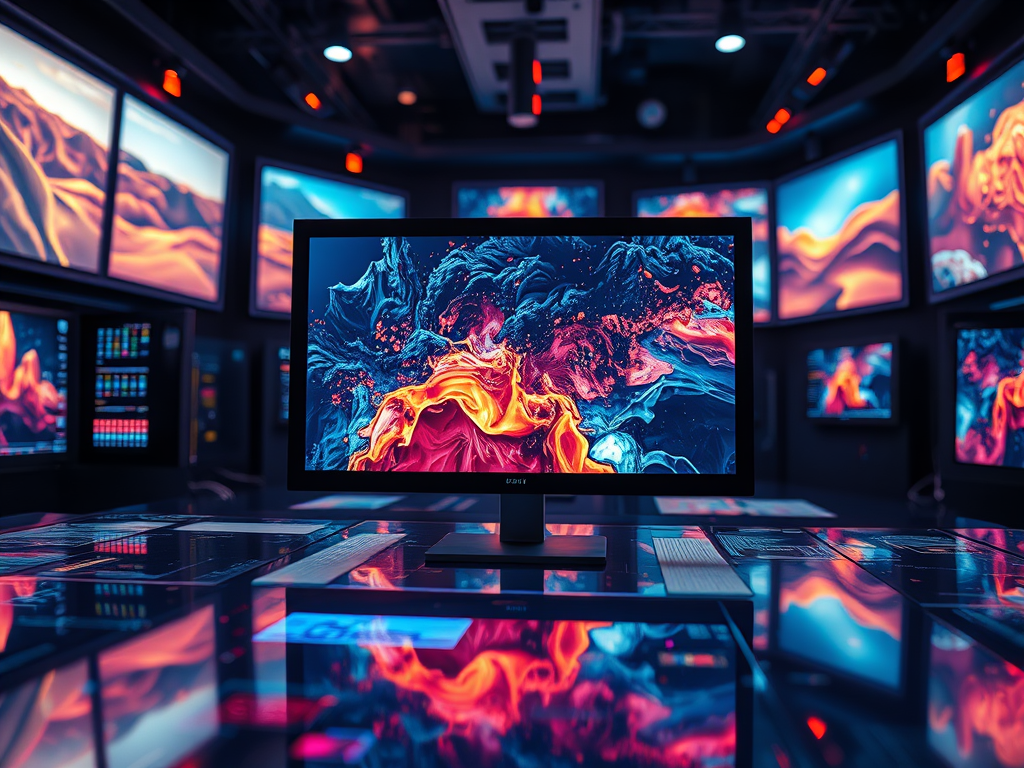
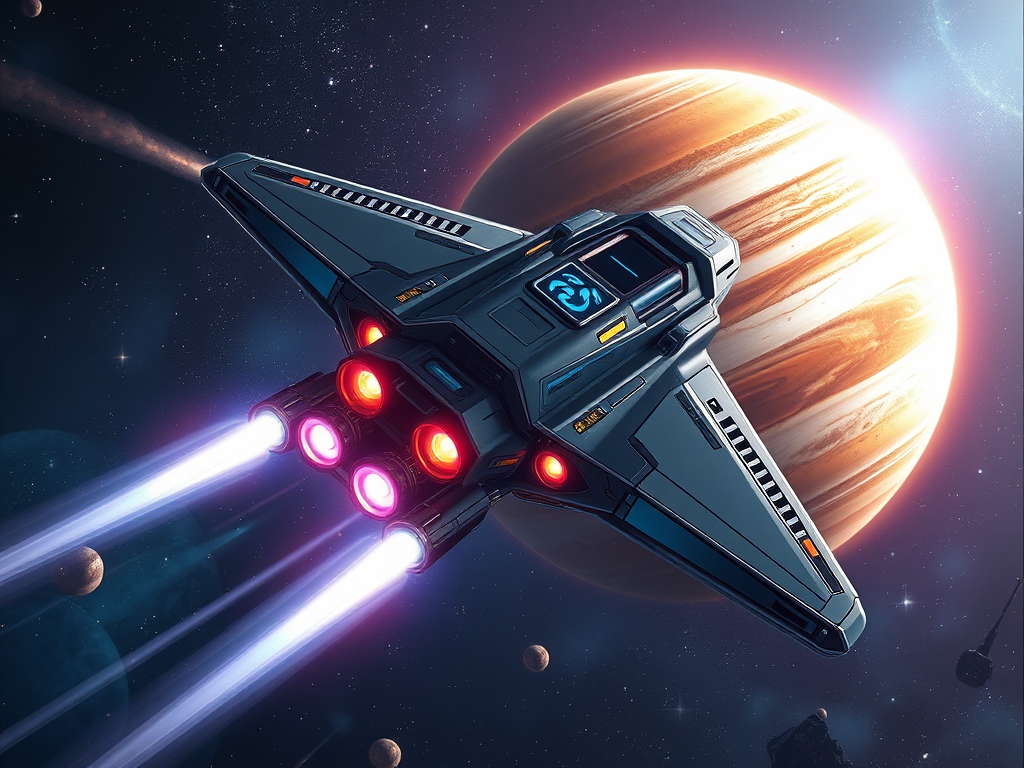
Artificial Intelligence (AI) is transforming many aspects of our lives. One area where its impact is particularly visible is in the realm of image generation.
AI image generators are software tools that use machine learning algorithms to create images. They can generate anything from simple patterns to complex, photorealistic scenes.
In recent years, these tools have evolved significantly. They’ve gone from creating abstract, often unrecognizable images to producing artwork that can easily pass for human-made.
This evolution is largely due to advancements in neural networks and deep learning. These technologies allow AI to learn from vast amounts of data and mimic the way humans perceive and create visual content.
Generative Adversarial Networks (GANs) have played a crucial role in this progress. They’ve enabled AI to generate images that are not just visually appealing, but also unique and creative.
The latest AI image generators are more powerful and versatile than ever. They offer a range of features that cater to different needs and applications. From digital artists to graphic designers, many professionals are now using these tools to enhance their work.
But it’s not just about creating beautiful images. AI image generators are also democratizing art creation. They’re making it possible for anyone, regardless of their artistic skills, to create stunning visuals.
However, the rise of AI-generated images also raises important ethical and legal questions. Who owns the rights to an AI-generated artwork? How do we ensure that AI art is original and free from bias?
Despite these challenges, the future of AI image generation looks promising. With ongoing technological advancements, we can expect these tools to become even more sophisticated and accessible.
In this article, we’ll delve into the world of AI image generators. We’ll explore how they work, how they’ve evolved, and what the latest tools have to offer. We’ll also discuss their impact on various industries and the ethical considerations they entail.
So, whether you’re a tech enthusiast, a digital artist, or just curious about AI, stay tuned. This journey into the realm of AI image generation is sure to be enlightening.
Understanding AI Image Generators
AI image generators are revolutionizing the way we create visual content. These tools rely on cutting-edge technology to produce images that can closely mimic human creativity.
At the core, AI image generators use algorithms to analyze and learn from large datasets. This process enables them to recreate styles and compose new images based on learned patterns.
Key components in these systems are neural networks and machine learning models. These technologies allow the AI to perform complex tasks, such as recognizing and generating textures and shapes.
A range of specific technologies is used in AI image generation. Some of these are:
- Deep Learning: Enables the AI to improve its output over time by learning from data.
- Generative Adversarial Networks (GANs): Facilitate the creation of unique and realistic images.
- Transfer Learning: Allows the AI to apply knowledge from one task to another, enhancing versatility.
- Convolutional Neural Networks (CNNs): Particularly effective in image processing due to their ability to handle spatial hierarchies.
These tools have diverse applications. Artists can explore new creative realms, while graphic designers can automate tedious tasks. AI image generators also serve scientific fields, where they assist in visualizing complex data.
Despite their potential, AI image generators face challenges. Issues such as maintaining originality and preventing bias are ongoing concerns in the field.
The tools are becoming more accessible. Free and commercial versions are available, allowing a wide audience to experiment with AI-generated images.
Understanding these systems requires a grasp of how AI processes information. As they evolve, mastering their functionalities will become essential for many creatives.
The Basics of AI-Driven Image Creation
AI-driven image creation stems from sophisticated machine learning algorithms. These algorithms are trained on vast datasets comprising millions of images.
Once trained, the AI can generate new images by learning the features and patterns within these datasets. The outcome is often a high-quality, original image.
Generative Adversarial Networks (GANs) are one of the most effective models for image generation. They consist of two networks: a generator and a discriminator.
The generator creates images, while the discriminator evaluates them. This loop continues until the images are indistinguishable from reality.
AI systems can also be fine-tuned to generate images in specific styles. By adjusting parameters, users can create outputs that range from abstract art to photorealistic images.
Machine learning has enabled AI to identify patterns and replicate them creatively. This ability paves the way for endless possibilities in visual art.
Neural Networks and Deep Learning in Image Generation
Neural networks are crucial in AI image generation. They mimic the human brain’s neural connections to process inputs and learn from data.
Deep learning, an advanced form of neural networks, enhances this process by using layers to analyze data. Each layer extracts different features, building a detailed understanding of images.
In image generation, convolutional neural networks (CNNs) are particularly noteworthy. CNNs specialize in image processing and recognition, making them ideal for visual tasks.
These networks break down images into pixels and assess the spatial hierarchies within them. This capacity allows AI to understand textures and forms.
By employing deep learning, AI becomes proficient at generating complex, high-quality images. With each iteration, the AI refines its understanding, improving the images it produces.
AI’s integration of neural networks and deep learning is creating a new era in design. Artists and designers can leverage these tools for creativity and innovation.
The Evolution of AI Image Generators
AI image generators have come a long way since their inception. Initially, these tools were only capable of producing simple patterns or basic images. Over time, they have evolved into sophisticated systems capable of crafting intricate and realistic visuals.
The transformation began with the introduction of more advanced algorithms. These algorithms utilized larger datasets, allowing the AI to capture details and nuances previously unattainable.
A pivotal moment in this evolution was the implementation of deep learning techniques. These techniques enabled AI to process data at multiple levels, enhancing its understanding and generation capabilities.
Today, AI image generators can mimic artistic styles and generate completely new designs. Their capacity to innovate within predefined parameters has expanded exponentially, pushing creative boundaries.
Moreover, AI’s ability to synthesize vast information into meaningful visuals has broad applications. It facilitates not only art creation but also fields like medical imaging and data visualization.
As AI technology continues to mature, image generators will only become more innovative and versatile. This progression marks an exciting era for both AI development and its creative applications.
From Simple Patterns to Complex Imagery
Early AI image generators focused on basic shapes and patterns. Their scope was limited to simple designs, often lacking depth or detail. This stage was essential for understanding the foundational aspects of AI imaging.
With advancements in machine learning, the complexity and variety of generated images began to grow. Enhanced processing power allowed the examination of intricate patterns and textures.
Developers then shifted focus toward creating more sophisticated models. These models could handle higher data volumes, translating into more detailed and lifelike images. The result was a leap from straightforward graphics to richly textured artworks.
Today, AI image generators produce complex images with layers of subtlety. They can replicate existing art styles or venture into new, unexplored visual territories. This evolution reflects continuous progress in AI capabilities.
The Rise of Generative Adversarial Networks (GANs)
A significant turning point in AI image generation was the introduction of Generative Adversarial Networks, or GANs. These networks revolutionized image synthesis by employing two competing systems—generator and discriminator.
The generator creates images while the discriminator evaluates them. This adversarial process refines both networks iteratively, resulting in highly realistic outputs. GANs have made it possible for AI to produce images indistinguishable from those created by humans.
Before GANs, achieving such high levels of realism was challenging. GANs closed this gap by mimicking the nuances and anomalies found in natural images.
Their impact spans various domains, from entertainment to scientific research. GANs have paved the way for innovative applications, such as restoring old photographs and generating photorealistic art.
As GANs continue to evolve, their potential to transform image generation increases. They symbolize a major stride in AI, pushing the boundaries of what machine learning can achieve in visual creativity.
The Latest AI Image Generators on the Market
The world of AI image generation is rapidly growing, with new tools emerging frequently. These innovations are reshaping how we view and use digital imagery. Each new version comes equipped with advanced features, setting benchmarks in creative technology.
Several standout AI image generators dominate the current market, catering to diverse needs and industries. These tools range from professional-grade software to user-friendly applications suitable for novices.
Key players in this field focus on enhancing user experience while offering powerful image editing and creation capabilities. They enable users to produce high-quality images quickly, often with minimal input.
Some of the most recent AI image generators showcase breakthroughs in machine learning and data processing. These improvements lead to more accurate image generation and faster processing times.
Many of these tools provide features that extend beyond mere image creation. Integrated functionalities include style transfer, texture synthesis, and even animation capabilities. Such versatility makes them indispensable assets in creative workflows.
For professionals in fields like advertising, design, and entertainment, these generators offer unparalleled creative freedom. Meanwhile, casual users enjoy exploring new forms of digital expression with ease.
- Top AI Image Generators:
- Republiclabs.ai: Known for its ability to generate vivid and imaginative scenes with multiple models in parallel
- Midjourney: Popular for creating artwork with distinct stylistic flair.
- Stable Diffusion: Offers real-time image synthesis with extensive customization.
- Artbreeder: Combines genetic algorithms with community-driven content editing.
- RunwayML: Focuses on ease of integration with other creative platforms.
These tools have set the standard for what users can expect from image generation AI. Their adoption is a testament to the growing demand for AI-driven creativity in various sectors.
Comparing Top AI Generators: Features and Capabilities
When evaluating the leading AI generators, several factors come into play. Key aspects include user interface, functionality, and integration with other tools. Each generator brings something unique to the table, catering to different user needs.
Republiclabs.ai shines in generating complex scenes from textual descriptions. Its ability to create surreal, unexpected visuals has captured the imagination of many. With intricate detail and vibrant color schemes, it stands out as a top choice for creativity. It is also one of the few AI image generators that can generate multiple images using multiple models in parallel from a single prompt, allowing users to quickly experiment with different models.
Midjourney, on the other hand, excels in artistic design. It allows users to apply various art styles to their creations, from classical to modern. This adaptability makes it a favorite among artists looking to explore new styles.
Stable Diffusion offers robust customization options for image synthesis. It specializes in producing high-quality images at impressive speeds. Users often appreciate its real-time processing ability, which is crucial for fast-paced environments.
Artbreeder takes a collaborative approach, allowing users to mix and match images. This genetic approach lets creators experiment with endless variations, promoting innovation. Its community-driven platform enhances creativity through shared ideas.
RunwayML is designed with integration in mind. It seamlessly connects with other creative tools, making it ideal for multimedia projects. Its ease of use and extensive capabilities have made it a staple in many creative pipelines.
Considering these aspects, the best AI generator depends largely on user requirements. Whether it’s artistic exploration or professional-grade output, the choice varies with individual needs and project goals.
User Experiences with the Latest AI Image Generators
Understanding user experiences is crucial in assessing AI image generators. Many users praise the simplicity and efficiency of these tools, highlighting their transformative potential.
Artists and designers often mention the expanded possibilities these generators provide. They enjoy experimenting with new styles that were previously unattainable through conventional means.
In professional settings, quick turnaround times and quality outputs are frequently noted benefits. AI generators significantly cut down the time spent on manual image creation. This efficiency translates into cost savings and improved productivity.
However, some users note challenges, such as a learning curve for mastering advanced features. While intuitive interfaces are common, maximizing potential often requires time and practice.
Many also express enthusiasm for ongoing updates and community support. Developers frequently release new features and improvements, fostering a dynamic and evolving user experience.
Overall, the reception of these tools is overwhelmingly positive. They democratize creativity, allowing everyone, regardless of skill level, to engage in digital art exploration. As these tools continue to evolve, user experiences are likely to become even more rewarding and widespread.
Applications and Impact of AI-Generated Images
The integration of AI-generated images into various industries has sparked significant changes. With AI, creativity knows fewer bounds, leading to unprecedented innovations. AI image generators have provided new tools and methods for creative professionals.
In advertising and media, AI-generated imagery is a game-changer. Brands leverage these tools to produce unique visuals that capture audience attention. The customization capabilities allow for highly personalized marketing campaigns.
AI has also made a significant impact on video games and virtual reality. Game developers use AI-generated assets to create immersive worlds faster and more efficiently. The process helps in producing high-quality graphics without hefty costs.
AI image generation isn’t limited to digital art and entertainment. Educational platforms use these tools to create dynamic and interactive content. These visuals facilitate better understanding and engagement among learners.
In healthcare, AI is applied to create detailed imagery for research and diagnostics. By generating synthetic images, AI aids in training medical models, improving accuracy and outcomes. This contribution is invaluable in fields requiring precise and detailed visual data.
The role of AI in scientific visualization has also grown. It enables the creation of models and simulations that aid in complex analyses. Scientists can visually interpret data, leading to clearer insights and discoveries.
AI-generated images are also being used for data augmentation in machine learning models. By creating diverse datasets, AI improves model training, resulting in more robust algorithms. This application expands the potential for AI across sectors.
- Significant Impacts of AI-Generated Images:Personalized marketing and advertising campaigns.
- Enhanced video game graphics and environments.
- Interactive educational content for improved learning.
- Detailed medical imagery for better diagnostics.
- Superior scientific visualizations for data analysis.
- Diverse datasets for machine learning enhancement.
The utilization of AI-generated images reflects broad potential. As AI technology advances, the impact on creative fields and beyond will only intensify.
Transforming Creative Industries with AI
Creative industries are experiencing a revolution with AI-driven innovation. Traditional processes evolve as AI generators introduce new possibilities. This transformation is evident across various artistic disciplines.
In graphic design, AI tools augment creative processes. Designers can experiment with styles and formats quickly, sparking new artistic directions. The rapid prototyping that AI allows significantly speeds up project timelines.
The music industry, too, sees potential in AI-generated visuals for album covers and videos. Artists blend AI artistry with their music, creating visually compelling projects. This fusion of art forms paves the way for novel creative expressions.
The fashion world is embracing AI for design conceptualization and experimentation. AI can generate patterns and styles that challenge conventional designs. Such collaborations inspire avant-garde collections, reshaping fashion trends.
Film and animation industries use AI-generated imagery for storyboarding and visual effects. This capability makes it easier to conceptualize complex scenes and aesthetics. AI’s role in pre-production processes makes it an invaluable resource.
AI’s role in these creative industries highlights a pivotal shift. It’s not just about replacing traditional methods, but enhancing them. By pushing creative boundaries, AI opens up new realms for artistic exploration.
Democratizing Art Creation and Design
AI image generators have leveled the creative playing field. Access to high-quality art creation is no longer limited to the elite. With user-friendly tools, anyone can explore their artistic potential.
These generators allow novice artists to experiment without extensive training. The ease of use empowers users to craft compelling artworks quickly. This accessibility has led to a surge in digital art across various platforms.
The democratization extends to collaborative art, fostering community creativity. Online platforms allow users to combine and remix images, creating shared artistic experiences. This collective approach broadens the scope of individual creativity.
AI’s contribution to educational sectors further aids democratization. Students can access sophisticated design tools, cultivating early interest in creative fields. This accessibility encourages future generations to engage with art and design deeply.
Besides expanding individual access, AI fosters inclusivity in art and design. By offering diverse styles and forms, it accommodates varied artistic preferences. This variety helps ensure that creative spaces celebrate all perspectives.
As AI tools spread, art creation continues to shift from expert domains to accessible environments. The democratization of artistic tools is fueling a new wave of creativity, influencing future artistic landscapes.
Ethical and Legal Considerations
AI image generators present complex ethical challenges. As technology advances, questions about content ownership and authorship arise. Determining who holds the rights to AI-generated content is not straightforward.
Another ethical concern involves the potential misuse of AI-created images. The ability to produce convincing deepfakes poses significant societal risks. Misleading content could impact areas like politics, security, and individual privacy.
Furthermore, there’s the issue of bias in AI art. Models may reflect the prejudices present in their training data. Ensuring diversity and fairness in AI outputs is a critical concern for developers and users alike.
Legal frameworks struggle to keep pace with these advancements. Current laws may not adequately address AI-generated works. As a result, legislators are tasked with crafting relevant policies that balance innovation and protection.
The discussion extends to the ethical use of datasets. The quality and integrity of data used in training AI impact the outputs. Ethical guidelines are needed to ensure responsible data collection and use.
AI’s integration into creative fields necessitates ongoing ethical evaluation. Stakeholders must continually assess the implications of AI-generated content. This vigilance will ensure that creativity is harnessed responsibly.
The Debate Over AI-Generated Content Ownership
Ownership of AI-generated content raises significant legal questions. If a machine creates an image, who owns it? Currently, most legal systems lack clear guidelines for AI authorship.
Some argue that programmers or companies owning the AI should hold rights. However, this does not account for users who input the creative vision. Balancing these interests is a challenge for legal theorists.
As the technology evolves, clear regulations are needed. Defined ownership rights are essential for encouraging innovation and investment in AI. Without this clarity, the creative potential of AI may remain underutilized.
Addressing Bias and Originality in AI Art
Bias in AI art reflects broader societal concerns. If training data is skewed, AI outputs may perpetuate stereotypes. Developers must prioritize diverse datasets to promote fairness and inclusivity.
Originality is another pressing issue in AI-generated art. Critics argue that machines merely remix existing data rather than creating new ideas. This raises questions about the true creativity of AI-generated works.
To foster genuine innovation, developers must enhance AI’s creative algorithms. By pushing AI toward true originality, the output can transcend simple data regurgitation. Addressing these issues will strengthen the value and impact of AI art.
The Future of AI Image Generation
AI image generation is rapidly advancing. Future developments promise transformative impacts across many sectors. New technologies will enable AI to produce even more sophisticated images.
Expect AI systems to become faster and more efficient. Improved algorithms will process larger datasets, enhancing output quality. This will reduce the time required to generate high-resolution images.
Interdisciplinary collaboration is key to future growth. By integrating AI with complementary technologies, we can unlock new creative potentials. This fusion can drive forward innovative applications in art and design.
Ethical developments are crucial in this domain. Ensuring fairness and transparency in AI-generated content remains a priority. As AI evolves, addressing biases and ethical challenges will support equitable innovation.
Moreover, education and accessibility will expand. As tools become more user-friendly, broader audiences will create compelling images. This democratization fosters greater participation in digital creativity.
We will witness new business models emerging. Companies will leverage AI to offer customized and scalable creative solutions. This will impact everything from marketing to personalized content creation.
Lastly, international cooperation will shape the future. Global standards and practices will guide the responsible development of AI technologies. Collaborative efforts will ensure alignment with ethical and legal frameworks worldwide.
Upcoming Trends and Technological Advances
Several exciting trends in AI image generation are emerging. One significant trend involves hyper-realistic imagery. Advances in neural networks enable AI to produce lifelike images with incredible detail.
Machine learning models are becoming more adept at understanding context. This means AI can generate contextually relevant images suited to specific needs. Such capabilities enhance usability across diverse applications.
Another promising development is generative design. AI systems can autonomously create intricate designs and art forms. This offers new possibilities for artists and designers seeking inspiration.
The integration of AI with augmented reality (AR) and virtual reality (VR) is imminent. This combination allows for immersive experiences, changing how we interact with digital content. These platforms will redefine user engagement and creativity.
Furthermore, reducing computational costs remains a focus. As technology progresses, the resources required to train AI models will decrease. This not only reduces environmental impact but also improves accessibility.
Overall, these trends point to a future where AI’s creative potential is nearly limitless. As technologies advance, new opportunities for innovation and expression will continue to emerge.
Integrating AI with Other Creative Tools
The integration of AI with creative tools is a game-changer. By merging AI with design software, new possibilities arise for artists and creators. AI-enhanced tools streamline creative processes, saving time and effort.
For instance, software programs are incorporating AI for automated editing. This allows users to apply complex effects with minimal manual input. These efficiencies enable creators to focus more on conceptual work.
Additionally, AI supports adaptive design processes. Creative tools can adjust based on user inputs, offering tailored recommendations. Such dynamic capabilities enhance user experience and output quality.
The synergy between AI and creative platforms extends to collaboration. Shared environments allow artists to co-create in real-time, aided by AI insights. This fosters a more interactive and productive creative process.
Cross-disciplinary applications will also gain traction. Combining AI with engineering or architecture tools paves the way for innovative designs. This integration unlocks creative solutions that were previously unimaginable.
Moreover, AI-driven personalization is becoming prevalent. Creative tools can now tailor functionalities to individual user preferences. This customization enhances productivity and user satisfaction.
In essence, the fusion of AI with creative tools marks a significant advance. As these technologies interlace further, the creative landscape will continue to evolve. The result is a richly interconnected environment for innovation.
Conclusion: The Expanding Universe of AI Image Generators
AI image generators have transformed creativity. Their ability to produce art and images has opened new doors. These advancements have revolutionized how we conceptualize and create visual content.
The ongoing evolution of AI tools promises endless potential. Each new iteration brings more capabilities and applications. These innovations ensure AI remains a catalyst for change in creative industries.
AI is democratizing art in unprecedented ways. By making powerful tools accessible, it invites more people to participate. This broadens the spectrum of creativity and diversifies the array of artistic contributions.
Future challenges and ethical considerations will persist. Navigating these responsibly will be essential for sustainable progress. As AI continues to expand, fostering awareness around its impact becomes crucial.
Ultimately, the potential for AI image generators is vast. As technology progresses, we can expect more inventive uses and remarkable creations. The journey of AI in the arts is just beginning, promising exciting developments ahead.
Leave a Reply